

Detecting And Fixing Memory Spikes In Web Apps
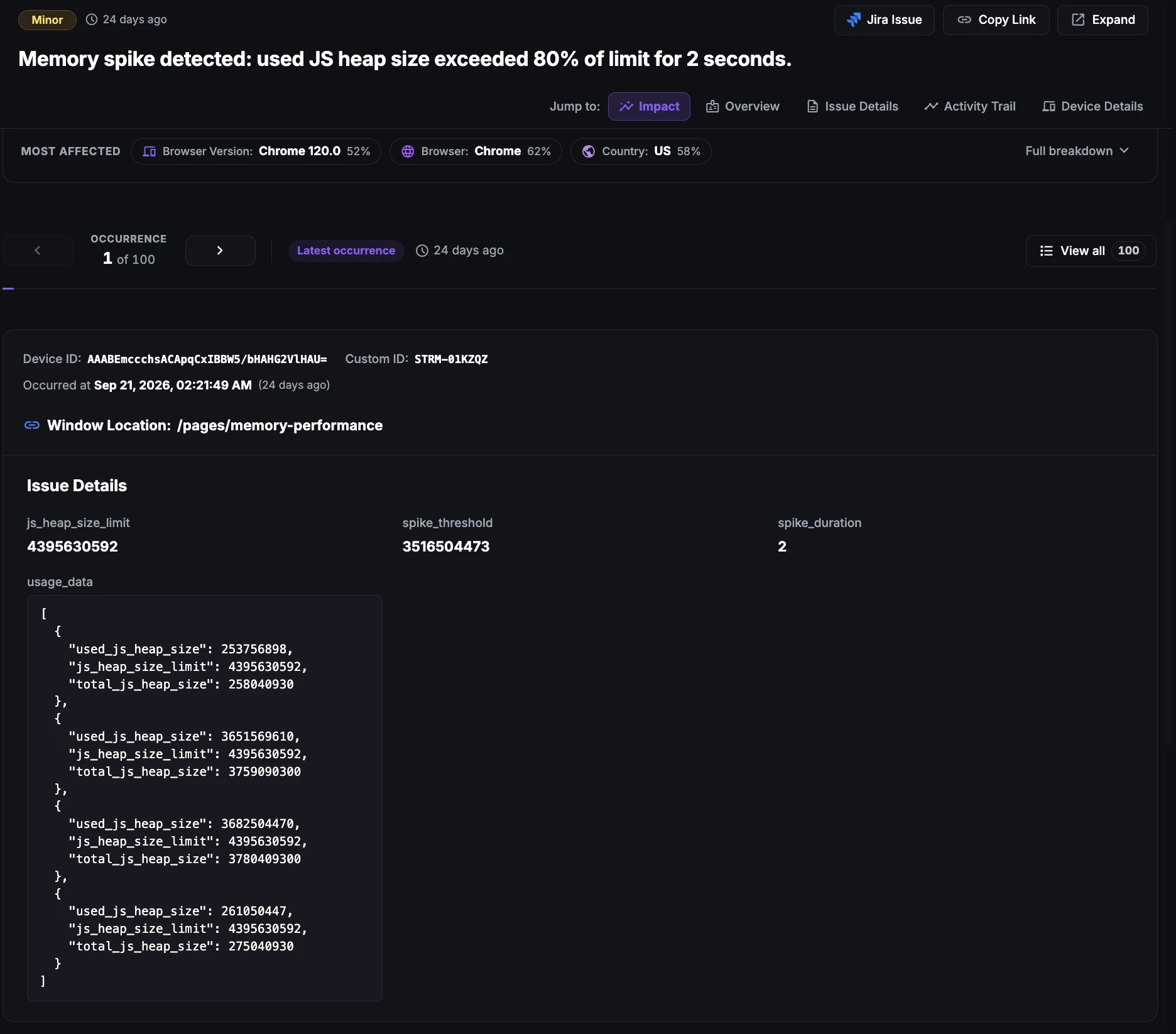
What is MemorySpike in Web apps?
A MemorySpike is a sudden, massive allocation of memory that occurs over a very short time window. Unlike a gradual leak, a spike is an immediate shock to the browser's memory limits.
Why it matters
Sudden memory spikes often freeze the main thread for several seconds, causing the UI to become completely unresponsive ("frozen"). If the spike exceeds the available heap, it causes an instant crash.
Why does this happen?
Client-Side File Processing
Attempting to parse massive CSV files, unzip archives, or generate heavy PDF documents synchronously on the main thread rather than offloading the work to a Web Worker.
Base64 Image Encoding
Converting massive image files to Base64 strings for upload creates a massive string primitive in memory that is roughly 33% larger than the original binary file.
DOM Explosion
Rendering tens of thousands of DOM nodes simultaneously (e.g., a massive data table without virtualization) causes an immediate spike in memory allocation for the browser's render tree.
How to fix it using Appxiom
- Analyze stack trace: Appxiom provides the exact minified and source-mapped stack trace pointing directly to the line of JavaScript/TypeScript code that triggered the issue.
- Trace activity trail: The activity trail provides a chronological list of user interactions (clicks, route changes) and network calls that occurred right before the issue, helping developers reproduce the exact user journey.
Stop guessing. Start fixing.
Get real-time alerts, exact stack traces, and complete activity trails before these issues impact your revenue.
Related Issues & Failure Guides
Detecting And Fixing HTTPStatusError In Web Apps
Capture 4xx/5xx HTTP status code failures, failed REST/GraphQL responses, and backend API errors in web applications in real time.
Detecting and Fixing HTTPDuplicateRequestError In Web Apps
Identify duplicate network requests, accidental multi-submissions, and excessive API retries that increase backend load and degrade web UX.
Detecting and Fixing HTTPDelayedResponseError in Web Apps
Detect delayed HTTP network calls, slow backend endpoints, and high TTFB latency impacting frontend web performance and conversion funnels.
We use cookies to improve your experience.